 English
 Deutsch
 Polski
 Français
 Română
 czeski
 Español
 Italiano
Fatimid Cairo and Medieval Markets
Islamic Cairo's Commercial Heritage
Islamic Cairo emerged during the Fatimid Period (969–1171 AD) when the Fatimids founded Al-Qahira, building mosques, gates, palaces, and covered markets that shaped the city’s medieval character. These souks clustered merchants by trade and functioned as protected, regulated spaces for commerce, social interaction, and community identity. Just south of Bab Zuweila—the grand southern gate of Fatimid Cairo completed in 1092 AD—Souk Al-Khayamiya developed as a center for textile and tent-making craftsmen who supplied ceremonial fabrics to Cairo for generations.
The Khayamiya Craft Tradition
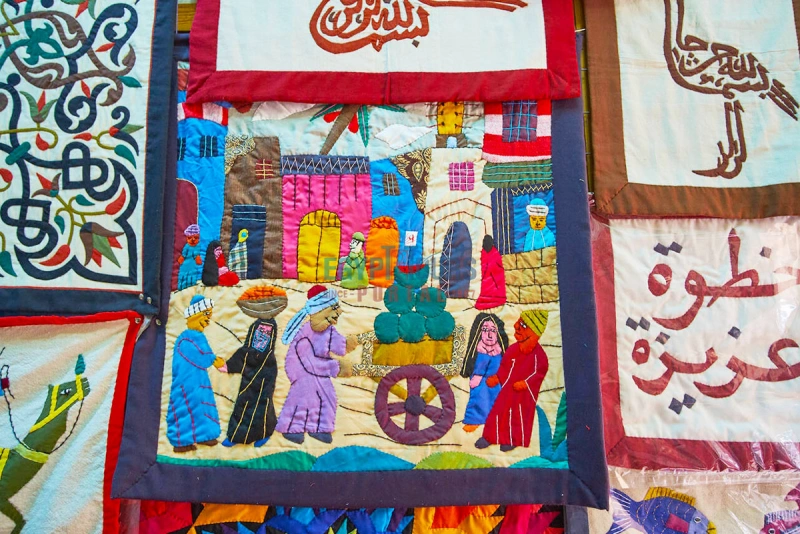
The khayamiya appliqué tradition in Egypt dates back centuries, with some scholars tracing influences to Pharaonic textile arts, though the specific techniques and aesthetic visible today developed during Islamic periods. The craft involves cutting colored cotton or silk fabrics into geometric shapes, arabesques, floral motifs, calligraphic elements, or figurative designs, then hand-stitching these cut pieces onto backing fabric to create decorative panels.
Traditional khayamiya served primarily for ceremonial tents erected for weddings, funerals, moulids (religious festivals celebrating saints), circumcision celebrations, and other significant events. Egyptian families would rent or commission elaborate tents for these occasions, with tent decorations reflecting the event's importance and the family's social status. The most prestigious events featured tents with sophisticated geometric patterns, Quranic verses in beautiful calligraphy, and complex color combinations requiring master craftsmen's skills.
Beyond tents, khayamiya decorated domestic interiors—wall hangings, cushion covers, bed covers, and curtains added color, pattern, and visual interest to homes while demonstrating aesthetic refinement and cultural sophistication. The craft represented important artistic tradition connecting Egyptian Islamic heritage with contemporary life, maintained by guilds of skilled artisans passing techniques from masters to apprentices across generations.
Where is Khayamiya Tentmakers Bazaar located in Cairo?
Khayamiya Bazaar (Souk Al-Khayamiya) is located in Islamic Cairo on Sharia al-Khayamiyya, immediately south of Bab Zuweila gate, approximately 500 meters south of Al-Azhar Mosque. It's about 2 kilometers east of Khan el-Khalili bazaar and 15-20 minutes walking from Khan el-Khalili via Al-Muizz Street. The bazaar is accessible by taxi, private car, or organized Islamic Cairo tours.
The Bazaar Architecture
Medieval Covered Market Design
Souk Al-Khayamiya preserves classic medieval covered market architecture rare in modern Cairo. The bazaar consists of a narrow street approximately 200 meters long, covered by a high roof creating a continuous covered passageway. This roof, supported by arches and columns, features sections that are solid (providing shade) interspersed with openings allowing natural light and ventilation—an elegant solution to providing covered space while preventing heat buildup and maintaining adequate light for detailed handwork.
The covered passageway creates a distinct microclimate—cooler than open streets in summer, warmer than exposed areas in winter, and consistently protected from dust, sun, and rain year-round. This controlled environment protected valuable textiles from degradation while providing comfortable working conditions for craftsmen spending long hours on detailed needlework.
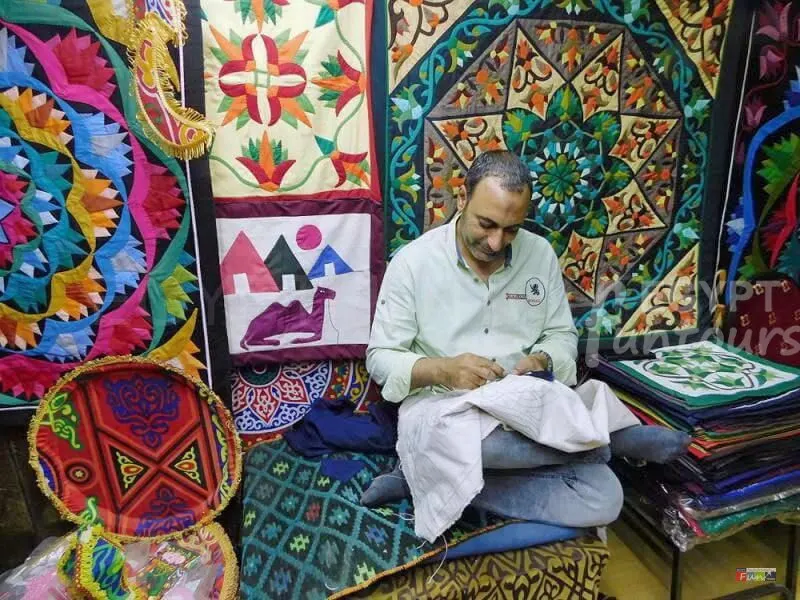
On either side of the central passage, small shops open directly onto the walkway. These shops, typically 2-4 meters wide and 3-5 meters deep, function as both workshops and retail spaces. Craftsmen work at the front where passing customers can watch, creating a living theater of traditional craft production. Completed khayamiya pieces hang from walls and ceilings, transforming shops into explosions of color—brilliant reds, deep blues, vibrant greens, golden yellows, and rich purples creating kaleidoscopic displays.
Current Condition and Preservation
While Souk Al-Khayamiya survives, it faces ongoing preservation challenges. The medieval structure requires regular maintenance to prevent deterioration. Egyptian heritage authorities and international organizations have supported conservation projects stabilizing the roof structure, restoring damaged sections, and improving infrastructure while maintaining historical authenticity.
The bazaar's survival depends partly on continued commercial viability. As long as craftsmen can earn livelihoods practicing khayamiya and merchants can sustain shops, the market will continue functioning as living heritage rather than becoming a museum. Tourism provides important income, but maintaining authentic craft production and serving local Egyptian customers remains crucial for preserving the market's cultural authenticity.
The Khayamiya Craft
Traditional Techniques
Creating high-quality khayamiya requires exceptional skill, patience, and artistic sensibility. The process involves several stages:
Design Planning: Master craftsmen traditionally worked from memory or simple sketches, having internalized repertoires of geometric patterns, arabesques, and compositional principles through years of practice. Modern artisans may use paper patterns for complex designs while still relying heavily on traditional knowledge.
Fabric Selection: Quality matters enormously. Traditional khayamiya used Egyptian cotton or imported silk in rich, colorfast dyes. Modern work uses both natural and synthetic fabrics, with the best craftsmen insisting on high-quality cotton that maintains color vibrancy and withstands handling and washing.
Cutting: Using sharp scissors, craftsmen cut fabric pieces following patterns. Precision is crucial—even millimeter deviations affect final patterns. This requires steady hands, sharp eyes, and deep experience understanding how fabric behaves when cut and stitched.
Arrangement: Cut pieces are arranged on backing fabric according to the design. Patterns typically build from simple elements combined into complex compositions—individual triangles, squares, circles, crescents, and arabesques unite into intricate geometric designs or flowing floral patterns.
Hand-Stitching: Each piece is individually hand-stitched to the backing using matching thread. Stitching must be strong enough to secure pieces permanently while remaining invisible from the front. Quality khayamiya shows near-invisible stitching on the front surface and neat, consistent stitching on the reverse.
Finishing: Completed panels receive final quality checks, pressing, and sometimes backing reinforcement. Large pieces like tent panels may have grommets or loops added for hanging and installation.
Design Vocabulary
Traditional khayamiya draws on rich Islamic artistic vocabulary including:
Geometric Patterns: Complex interlocking shapes—stars, polygons, interlacing lines—creating mathematically sophisticated designs symbolizing divine order and infinite complexity underlying creation.
Arabesques: Flowing, curving plant-inspired forms—stylized vines, leaves, flowers—representing nature's beauty and organic growth.
Calligraphy: Arabic text, usually Quranic verses or religious phrases (Bismillah, Mash'Allah), integrating sacred language into decorative art. Calligraphic khayamiya requires especially skilled craftsmen capable of rendering elegant lettering.
Color Symbolism: Traditional color choices carried meanings—green (Islam, paradise), blue (heaven, eternity), red (life, passion), white (purity), gold/yellow (light, splendor). Contemporary work uses broader palettes but traditional associations remain influential.
Visiting Khayamiya Bazaar
Location and Access
Souk Al-Khayamiya is located on Sharia al-Khayamiyya (Tentmakers Street) immediately south of Bab Zuweila gate in Islamic Cairo. The area lies approximately 500 meters south of Al-Azhar Mosque and 2 kilometers east of Khan el-Khalili bazaar.
Getting There: Accessible by taxi (specify "Souk Al-Khayamiya" or "Bab Zuweila"), private car, or organized Islamic Cairo walking tours. Some visitors walk from Khan el-Khalili (15-20 minutes) via Al-Muizz Street and through Bab Zuweila. Cairo Metro's closest stations are Ataba or Bab el-Shaaria (15-20 minute walk).
Nearby Landmarks: The bazaar's proximity to Bab Zuweila (impressive medieval gate), Al-Muizz Street (Cairo's finest Islamic architecture street), Sultan Hassan Mosque, Ibn Tulun Mosque, and the Citadel of Saladin makes it easy to combine visits in Islamic Cairo itineraries.
What to Expect
The bazaar stretches approximately 200 meters with 20-30 shops on both sides. Most shops remain family businesses, with multiple generations working together—grandfathers supervising, fathers cutting and stitching, sons learning techniques, and sometimes daughters helping with simpler tasks or customer service.
Visiting feels intimate and authentic. Unlike tourist-heavy Khan el-Khalili, Khayamiya Bazaar sees fewer visitors, creating relaxed atmosphere where craftsmen happily demonstrate techniques, explain designs, and share craft knowledge without aggressive sales pressure (though obviously hoping for purchases).
Watching master craftsmen work provides fascinating education. The precision of their cutting, speed and accuracy of stitching, and ability to create complex patterns without templates demonstrates skill levels achievable only through years of dedicated practice. Many craftsmen welcome questions and enjoy explaining their work to interested visitors.
Shopping for Khayamiya
Khayamiya makes excellent souvenirs and decorative art: wall hangings in various sizes, cushion covers and pillows, table runners and placemats, bags and pouches, small decorative panels, and occasionally complete tent panels for collectors or those planning Egyptian-themed events.
Distinguishing Quality:
Handmade vs. Machine-made: Handmade pieces show slight irregularities in stitching and cutting, have visible hand-stitching on reverse, use quality fabrics. Machine-made pieces have perfectly uniform stitching, machine-stitch patterns on reverse, often use thinner fabrics.
Fabric Quality: Better pieces use substantial cotton, vibrant colorfast dyes, well-finished edges.
Design Complexity: More intricate designs with fine details, precise geometric patterns, or complex calligraphy indicate higher skill levels and value.
Stitching Quality: Examine reverse side—consistent, neat hand-stitching indicates quality craftsmanship.
Bargaining: Expected and appropriate. Initial asking prices typically start 2-3 times what merchants expect to receive. Respectful bargaining is part of transaction culture. Expect to pay approximately 50-70% of initial asking price. For truly exceptional handmade pieces by master craftsmen, prices may be less flexible as these represent significant time investments and rare skills.
Fair Pricing: Quality handmade khayamiya represents substantial skilled labor. A medium-sized wall hanging might require 10-20 hours of work. While bargaining is expected, recognize that fair prices compensate craftsmen adequately for skilled work.
Cultural Significance
Souk Al-Khayamiya represents more than tourist attraction or shopping destination—it embodies living cultural heritage where traditional crafts, merchant culture, and community connections continue operating in forms recognizable to merchants from centuries past. The bazaar provides livelihoods for families who have practiced these crafts for generations, maintains spaces where traditional skills pass from masters to apprentices, preserves architectural heritage increasingly rare in modernizing Cairo, and serves local Egyptian customers who still commission khayamiya for weddings, religious celebrations, and home decoration.
The bazaar's survival demonstrates that traditional crafts can remain economically viable in modern contexts when quality, authenticity, and cultural meaning are maintained. Tourism provides supplementary income, but the craft's continued local relevance sustains it as living tradition rather than performance for tourists.
What is khayamiya and what makes it unique?
Khayamiya is traditional Egyptian appliqué textile art where colored cotton or silk fabrics are cut into geometric patterns, arabesques, or calligraphic designs and hand-stitched onto backing fabric. The craft traditionally decorated ceremonial tents (khaima) for weddings, funerals, and celebrations. What makes it unique is the centuries-old techniques, intricate geometric and Islamic designs, and skilled hand-stitching requiring years to master. True khayamiya is entirely hand-stitched, not machine-made.
What can you buy at the Tentmakers Bazaar?
The bazaar offers various khayamiya products: wall hangings in multiple sizes (from small decorative panels to large pieces), cushion covers and decorative pillows, table runners and placemats, bags and pouches, bed covers and throws, and occasionally complete tent panels. Products feature traditional Islamic geometric patterns, arabesques, calligraphy, and sometimes contemporary designs. Quality ranges from simple machine-made items to exceptional handmade pieces by master craftsmen.
How can you tell authentic handmade khayamiya from machine-made?
Authentic handmade khayamiya shows: slight irregularities in cutting and stitching (not perfectly uniform), visible hand-stitching on the reverse side, quality cotton or silk fabrics with vibrant colors, precise but not mechanically perfect geometric patterns. Machine-made pieces have: perfectly uniform stitching, machine-stitch patterns visible on reverse, often thinner fabrics, lower prices, and mechanical precision. Always examine the reverse side and ask craftsmen to explain how pieces were made.
Is bargaining expected at Khayamiya Bazaar?
Yes, bargaining is expected and culturally normal in Egyptian markets. Initial prices typically start 2-3 times what merchants expect to receive. Respectful negotiation is part of the shopping experience. Expect to pay approximately 50-70% of the initial asking price for most items. For exceptional handmade pieces by master craftsmen, prices may be less flexible as they represent significant skilled labor. Always bargain respectfully, recognizing fair prices compensate artisans adequately.
How long should you spend at the Tentmakers Bazaar?
Allow 30-60 minutes for browsing, watching craftsmen work, and casual shopping. If seriously interested in purchasing quality pieces or learning about the craft in detail, allow 1-2 hours for careful examination, conversations with artisans, and thoughtful selection. The bazaar combines easily with nearby Islamic Cairo attractions (Bab Zuweila, Al-Muizz Street, Sultan Hassan Mosque) in half-day or full-day Islamic Cairo tours.
What is the best time to visit Khayamiya Bazaar?
The best time is late afternoon (4:00-6:00 PM) when beautiful light filters through the covered market, craftsmen are actively working, the market is lively but not crowded, and lighting creates excellent photography conditions. Morning visits (9:00-11:00 AM) are quieter with comfortable temperatures. Avoid Friday mornings as many shops may be closed for prayers, though most open Friday afternoons.
What nearby attractions can you combine with Khayamiya Bazaar?
The bazaar combines well with nearby Islamic Cairo attractions: Bab Zuweila (impressive medieval gate immediately north), Al-Muizz Street (Cairo's finest Islamic architecture street, 5-10 minutes walk), Sultan Hassan Mosque (10 minutes), Ibn Tulun Mosque (10 minutes), the Citadel of Saladin (15 minutes), and Khan el-Khalili bazaar (15-20 minute walk). Most organized Islamic Cairo tours include these sites in full-day or half-day itineraries.